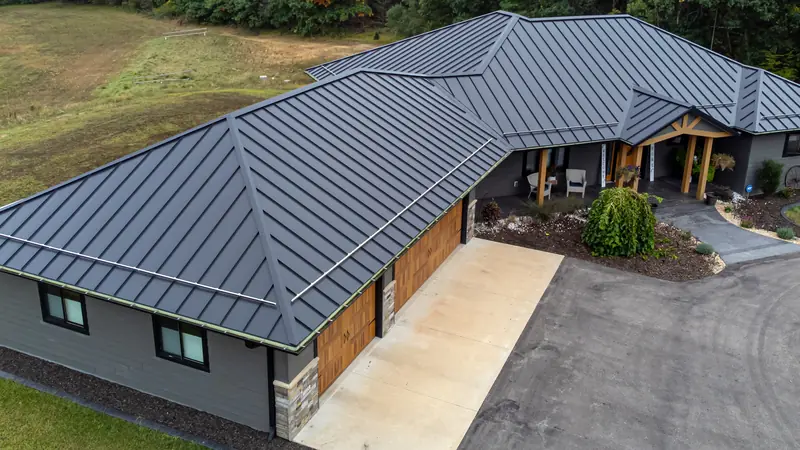
Interest in metal roofing in Temple, TX has grown for good reasons: a well-installed metal roof sheds water quickly, stands up to high winds, reflects a good share of summer sun, and can outlast several asphalt roofs. It is also a bigger upfront investment, and not every metal system behaves the same way on a Bell County house. Temple Roofers installs and repairs metal roofs on homes and light commercial buildings, and our job is to help you pick the system that matches your budget, your roof's shape, and how long you plan to stay.
Below we walk through the three metal systems most homeowners ask about, what to watch for on an existing metal roof, and how our process works from first look to final walkthrough.
Comparing Metal Roofing Systems
"Metal roof" covers several very different products. The biggest differences come down to how the panels attach to the deck and how the finish holds up over decades of sun.
| System | How it attaches | Strengths | Things to weigh |
|---|---|---|---|
| Standing seam | Concealed clips or fasteners under raised, interlocking seams | Clean look, no exposed screws to maintain, allows panels to expand and contract with heat | Highest cost of the three; requires experienced installers and careful flashing details |
| Exposed-fastener (R-panel, corrugated) | Screws with rubber washers driven through the panel face | Lower material and labor cost; common on barns, shops and some homes | Washers dry out and screws can back out over time from thermal movement, so periodic maintenance is needed |
| Stone-coated steel | Interlocking panels shaped like shingles, shakes or tile, fastened to battens or deck | Textured granular surface hides minor marks; traditional appearance suits many neighborhoods | Heavier than bare panels; granule coating can wear at high-traffic spots over many years |
For most homes we look at roof pitch first. Standing seam and stone-coated steel each have minimum slope requirements set by the manufacturer, and low-slope sections such as porch roofs may need a different panel profile or material. Our roof pitch calculator gives you a quick way to understand the slope of your roof before we visit.
Heat, Reflectivity and Attic Comfort
Temple summers routinely push into the upper 90s and past 100 °F, with intense UV. Metal panels with light-colored or "cool roof" coatings reflect more solar energy than dark surfaces, which can reduce how much heat reaches the attic. The real-world benefit depends on color, coating type, insulation and especially attic ventilation, so we avoid promising a specific savings number. If your attic already runs hot, we will look at intake and exhaust ventilation as part of the project. Our article on how Texas summer heat affects your roof and attic covers this in more detail.
Hail and Metal: What Homeowners Should Know
Metal roofs generally resist puncture from hail far better than shingles, and many panels carry impact ratings. However, "won't leak" and "won't dent" are not the same thing. Large hail can leave visible dimples, especially on thinner gauges and smooth, flat panel areas. These dents are often cosmetic and do not affect the roof's ability to keep water out.
Thicker gauges, textured or stone-coated surfaces, and ribbed profiles tend to show dents less. We will explain the tradeoffs openly rather than steering you to the most expensive option.
Warning Signs on an Existing Metal Roof
Metal roofs are low-maintenance, not no-maintenance. From the ground or a window, watch for:
- Rust streaks running down from screw heads, seams or cut edges
- Screws that look raised, missing, or tilted on exposed-fastener panels
- Panels that have lifted, shifted or show gaps at the ridge or eaves
- Loose or bent trim, ridge caps or flashing around chimneys and vents
- Chalky, faded or peeling paint finish
- Water stains on ceilings, or daylight visible through the roof deck in the attic
- Rattling or "oil-canning" noises during wind or temperature swings
Most of these can be addressed with targeted roof repair, such as fastener replacement, sealant renewal or re-securing trim, long before a full panel replacement is needed.
Our Metal Roofing Process
- Free, no-obligation inspection. We assess your current roof, decking, pitch, ventilation and any problem areas. If you are switching from shingles, we check whether the existing deck is sound enough to support the new system.
- Photo documentation. You receive photos of what we found, so you can see the condition of your roof without going up there yourself.
- Written estimate with options. We lay out the systems that suit your home, typically comparing at least two panel types, finish choices and gauge, with a clear scope of work. For a rough budget starting point, try our roof replacement cost calculator.
- Installation. Tear-off or overlay is decided based on local code, deck condition and the manufacturer's requirements. Underlayment, flashing, trim and closures are installed to the system's specifications.
- Final walkthrough. We review the finished roof with you, clean up fasteners and panel scraps, and go over any maintenance recommendations.
Local Weather Considerations in Temple and Bell County
Metal's strengths line up well with the weather here. Spring storms between roughly March and June bring hail and strong straight-line winds, and properly fastened panels with secured trim resist wind uplift better than many other coverings. Heavy downpours run off metal quickly, which puts more emphasis on correctly sized gutters and drainage at the eaves. Wide daily temperature swings cause panels to expand and contract, so clip systems and fastener placement matter. Occasional winter freezes can also let snow and ice slide off metal suddenly, which is worth considering above walkways and entries.
Homes near Lake Belton or Stillhouse Hollow Lake, and older houses near downtown Temple with complex rooflines, each bring their own details. We will point out the specifics on your property during the inspection.
When to Schedule a Metal Roof Inspection
- After any hailstorm or high-wind event in the Temple area (you can track recent conditions on our local weather page)
- Every couple of years on exposed-fastener roofs to check screws and washers
- Before buying a home with an older metal roof
- When you are deciding whether to replace shingles with metal
Not sure whether metal or shingles makes more sense? Compare it with our asphalt shingle roofing options, or read how long a roof lasts in Temple, Texas. When you are ready, request a free roof inspection or call (512) 297-7580.
Metal Roofing FAQs
For many homes, yes. Metal handles high winds, sheds heavy rain quickly and can reflect a good share of summer heat when finished in lighter or cool-rated colors. The higher upfront cost makes the most sense if you plan to stay in the home for many years.
Large hail can leave dents, especially on thinner, smooth panels. These dents are often cosmetic and do not cause leaks. Thicker gauges, textured finishes and stone-coated steel tend to show dents less. Check whether your insurance policy has a cosmetic damage exclusion for metal roofs.
Standing seam panels attach with hidden clips or fasteners under raised seams, so there are no screws exposed to the weather. Exposed-fastener panels are screwed through the face, which costs less upfront but requires periodic checks of screws and rubber washers.
Metal installed over solid decking and underlayment, as on most homes, is usually not much louder than a shingle roof from inside the house. Panels installed over open framing, like on barns, are much louder.
Sometimes, depending on local code, the condition of the deck, the number of existing layers and the panel manufacturer requirements. We check these during the free inspection and explain whether a tear-off or overlay is appropriate.